


Ariel Marcy talks to researchers who think the seeds are sown for plant-based vaccines, using a technique called molecular farming. This article originally appeared in the Cosmos Print Magazine, March 2025.
The year is 2020. Professor Waranyoo Phoolcharoen and her co-founders have just pivoted their Bangkok-based biotech start-up. They’re now focusing on the novel SARS-CoV-2 virus causing COVID-19. It’s a moonshot move.
Their small company, Baiya Phytopharm, founded just one year prior, had initially set its sights on reagents for lab tests and cosmetic ingredients. But Phoolcharoen knew that the technology at the centre of her company could accomplish more.
Unlike the industry standard of cell cultures grown in large, smelly vats called fermenters, Baiya Phytopharm grows proteins in plants. The technique, called plant molecular farming, promises to be at least as quick and effective as traditional methods with additional benefits in safety, scalability and storage.
Unfortunately, plant molecular farming has a lacklustre track record of commercial success. Almost 30 years after its inception, only a handful of plant-based pharmaceuticals have made it to human clinical trials.
In the high stakes industry of pharmaceuticals, established companies have little incentive to adopt new techniques. But the status quo doesn’t serve everyone equitably.
“Thailand is a middle-income country, but if we were very poor, then maybe we’d get a vaccine quicker,” says Phoolcharoen. “But because we are not very rich and not very poor, we are almost the last country who gets the vaccines.”
Buoyed by a highly successful crowdfunding campaign supported by Thai people, Phool-charoen’s team raised the capital needed to build a plant molecular farming facility. Next came the challenge of growing a vaccine at scale for the first time under pandemic-level pressure.

From farming to pharming
Plants have been a familiar source of human medicines for millennia. Plant molecular farming expands this practice by introducing foreign DNA into plants so that they produce new, useful proteins.
One of the first proof-of-concept experiments for plant-based pharmaceuticals occurred in 1989 when researchers grew antibodies inside tobacco plants. Today, plant molecular farming encompasses a diversity of techniques, plant species and end-products.
When the end-product is a pharmaceutical, say a vaccine, the field is conveniently referred to as pharming. This is more specific than molecular farming with an ‘f’, where the end-products can be any foreign protein, such as plant-based animal proteins or industrial enzymes. For now, let’s focus on pharming.
Pharming can involve a variety of crop plants, from rice to carrots or even strawberries, but the pharming workhorse is an unassuming Australian plant called Nicotiana benthamiana, or benthi for short. This is the plant Phoolcharoen uses.
As the genus name implies, benthi is closely related to tobacco (Nicotiana tabacum) and it benefits from the amassed knowledge of the tobacco industry.
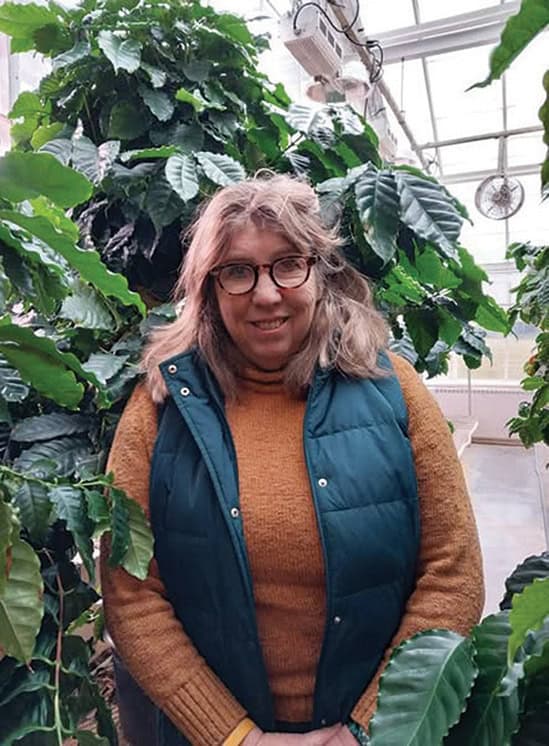
“In medicine, often they’ll study mice or rabbits. People in the plant world will study Nicotiana benthamiana or Arabidopsis,” says Professor Kathleen Hefferon, a plant molecular farming scientist at Cornell University in the US. “They are really easy to grow, they have short lifecycles, and we know a lot about them.”
Trojan horses
Beyond being a model organism, benthi is ideal for a molecular farming technique called transient expression. It temporarily introduces DNA into a plant’s nucleus. The method is fast, producing large amounts of protein in a matter of days.
To achieve this, scientists introduce DNA encoding the protein of interest into the plant cells. They use microscopic vectors or “trojan horses”, usually viruses or the soil bacterium Agrobacterium.
“[Benthi] has very few defences so viruses grow really well in it, and you can grow lots of proteins in there,” says Hefferon.
Once the vectors are introduced, the plants are returned to carefully controlled greenhouses. Under the hum of artificial lights, they grow large amounts of the foreign protein in their leaves.
Again, benthi is well suited to this step. “It’s very leafy, so you have these nice broad leaves that you can easily mush up and extract the protein from. It’s very quick,” says Hefferon.
After the extraction step, scientists can use established techniques to purify the proteins of interest and prepare them for therapeutics, such as vaccines.
The plant advantage
Currently, most pharmaceutical companies produce their therapeutic proteins in single-celled microorganisms. For proteins assembled for use in mammals (including humans), companies most often use cultures of Chinese hamster ovary (CHO) cells.
All these types of cells must be grown in bioreactors, stainless-steel vessels that support and regulate cell growth under highly controlled, sterile conditions.
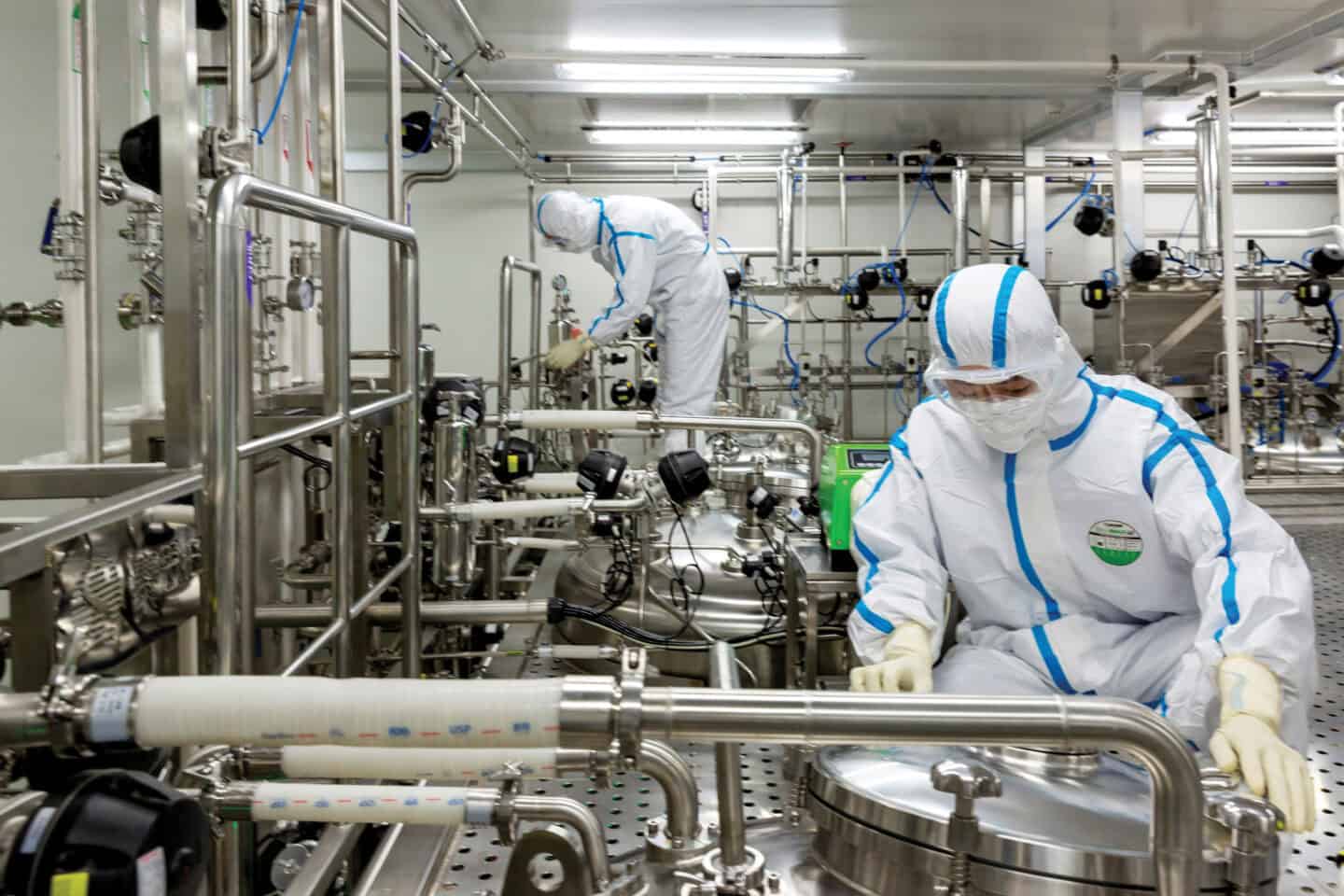
Pharming, by contrast, employs plants as living bioreactors. This affords the aforementioned advantages in safety, scalability and storage.
From a safety and efficacy perspective, plants occupy a convenient location on the evolutionary tree. As very distant relatives of mammals, plants cannot be infected by human pathogens in the way a CHO bioreactor can; nor are plant viruses infectious to humans.
Yet as fellow eukaryotes, plants perform many of the protein modifications that make complex human proteins function.
Compared to traditional bioreactors, pharming is easier to scale – simply plant more plants. The density of protein made within each plant also means that pharming does not require extensive space. For example, researchers in Italy estimated that they could vaccinate 35 million people with 12,500m2 of benthi in greenhouses. That’s smaller than a cricket pitch.
Compared to the products of traditional bioreactors, plant-derived proteins can be easier to transport and store for several reasons.
The therapeutic protein benefits from the presence of a thick cell wall, which protects it from being degraded at room temperature. This is particularly true if the protein is expressed in a plant’s seed.
“The protein can become quite inert. It’s not being degraded in any way,” says Hefferon. “If you can keep the water out, if you dry it out and make a powder. It’s really quite safe.”
Because pharming facilities are easier to scale and have fewer technical requirements, they can be set up across several facilities, close to multiple population centres. This reduces the need for long-distance transportation, where constant refrigeration is difficult to achieve.
All of these advantages – combined with the speed of transient expression – make molecular pharming ideal for vaccine production in low- to middle-income countries.

Human trials and tribulations
Back in Bangkok, the year is now 2021. Phoolcharoen’s team has successfully used benthi to grow a virus-like particle protein based on the COVID-19 virus.
They have found success using this protein to induce an immune response in mice and monkeys.
The next step is going into human clinical trials, which usually involves 3 phases before gaining approval from the national Food and Drug Administration.
Phase 1 tests whether a new drug is safe in a small group of people. Phase 2 trials are larger, usually 100 to 300 people, and these trials further test the effectiveness of a drug. Phase 3 can involve thousands of people, and these trials study the drug’s effectiveness in different populations at different dosages and compared to similar treatments.
By October 2021, Baiya Phytopharm entered their first plant-based vaccine into phase 1 clinical trials. “We found that it is safe in humans, but it only induced a low immune response,” says Phoolcharoen.
Undeterred, the team developed a second-generation vaccine and by March 2022, they entered phase 1 human clinical trials again. This time the vaccine proved to be safe and effective. Unfortunately, the timing was off.
“After we passed phase 1, we then had to manufacture the vaccine batch for the phase 2 clinical trial. But at that time, COVID numbers went down,” she said. Because of the drop in infection rates, the funding agency decided not to go further with the trial.
Meanwhile, Pfizer and Moderna finished phase 3 trials and received emergency use authorisation for their vaccines by December 2020.
Pharming simply couldn’t compete with established pharmaceutical companies. But experts don’t attribute these failings to the technology.
“Developing new drugs is a very difficult business and particularly if you are a newcomer to the field,” says Professor Julian Ma, founder and former president of the International Society for Plant Molecular Farming and Hotung Chair of Molecular Immunology at St. George’s University in London.
Ma points to another pharming company, Medicago, whose plant-based COVID-19 vaccine passed phase 3 clinical trials and even gained approval in Canada in February 2022.
“The vaccine works great. But it was a business failure because they developed a vaccine and they put it into trial as the first vaccine that you would receive,” says Ma. “They didn’t trial it as a booster vaccine.”
This meant that, as a latecomer, Medicago struggled to find patients who hadn’t already received one of the major vaccines.
To make matters worse for Medicago, the World Health Organisation rejected their vaccine for emergency use listing because the company was partially owned by tobacco giant Phillip Morris. Due to these business-related pressures, Medicago folded in 2023.
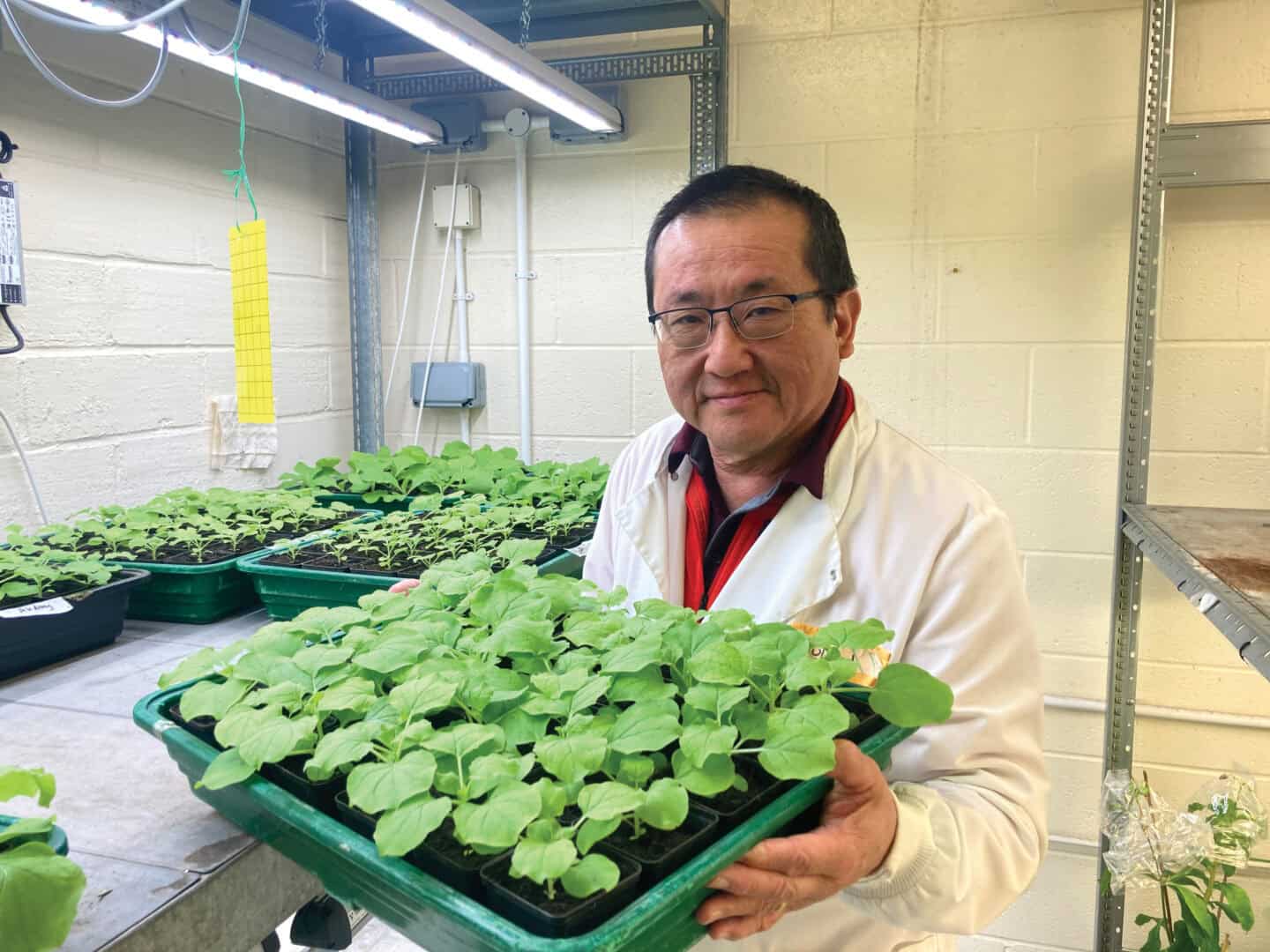
For Ma, watching the pandemic as a pharming expert was not easy. “It was frustrating because we always said that the great thing about plants is you can make things really quickly, and so on the face of it, we just thought this is going to be our time because obviously we needed something really quickly.”
Instead, mRNA vaccines emerged as the new vaccine technology delivered on short timeframes. Both Pfizer and Moderna used CHO cell fermenters to manufacture their mRNA vaccines.
But the starting line for these mRNA vaccines occurred far before the pandemic. “They weren’t starting from ground zero,” states Ma.
“They had been preparing mRNA vaccines against coronaviruses ever since SARS-CoV-1 [17 years earlier]. The development of the SARS-CoV-2 vaccine happened really quickly because of all that preliminary work.”
As Phoolcharoen put it, pivoting to vaccine development in 2020 meant “we had to learn from the beginning how to do this and how to do clinical trials in Thailand.”
Indigenous roots
Warlpiri Aboriginal People have cultivated benthi for its medicinal properties for thousands of years. They almost certainly selected for traits, such as faster maturity, which make benthi ideal for pharming.
A 2022 study used genetics and historical documents to pinpoint the precise provenance of laboratory benthi to Warlpiri Country. Authors Steve Wylie and Hua Li, from Murdoch University in Western Australia, argue that the origins of benthi are now known.
“Australia has a responsibility to ensure fair and equitable sharing of benefits to Indigenous communities arising from use of Australia’s biological resources,” they write in the journal Viruses.
Benthi is the subject of at least 80 patents and worth many millions of dollars.
Ready for the next pandemic?
Experts remain optimistic about pharming’s ability to produce a vaccine quickly and cost-effectively, especially for low- to middle-income countries.
Ma argues that Baiya Phytopharm’s success was an important step that demonstrated self-dependency.
“If Thailand said, ‘we want a vaccine against COVID,’ they could make it. They don’t have to go begging to the United States or Europe. They can just do it themselves.” Ma points to Cape Biologix, a South African pharming company as another prime example.
Ma identifies the next hurdle for pharming as good manufacturing practice (GMP) facilities that can produce vaccines and other pharmaceuticals at the scales needed to address a pandemic.
“We’re faced with an industry, which is on the verge of breaking through but hasn’t,” says Ma. “Because to break through what you need is not just the idea, the technology, but you need the infrastructure to make a vaccine.”
Ma notes that Medicago had to sell off their GMP facility when they folded, and he estimates that only a couple of GMP facilities for pharming exist worldwide. This compares to 40–50 facilities that exist for companies relying on industry standard platforms.
Farming first
Ma observes that “pharming with a ‘ph’ probably depends on [molecular] farming with an ‘f’ to be successful as an initial step.” Making proteins other than pharmaceuticals “serves two purposes,” says Ma. “One is it starts income generation much earlier for a company, but it also serves to demonstrate the technology.”
Cornell-based Hefferon recently founded a molecular farming company called Forte Protein. Her firm uses benthi to grow plant-based casein, the key cheese-making protein in dairy products. Her outlook is abundantly optimistic.
“I think I’m riding a wave to a lot more popularity for molecular farming. It seems to me it’s been steadily growing, this field. And I think that we’re going to see more and more of it.”
Hefferon’s perspective is backed up by successes of even larger molecular farming firms. For example, last year Argentina-based Moolec Science raised $30 million to expand its molecular farming facilities. It’s a company that grows pork protein inside of soybeans.
As for Baiya Phytopharm, Phoolcharoen’s company now straddles both molecular farming and pharming with projects spanning alternative meats, cosmetic ingredients and cancer immunotherapies. Notably, they provide both greenhouse space and expertise in molecular farming to smaller companies in the region.
And there’s a multiplier effect for biotech companies operating in low- and middle-income countries. By employing and training local scientists, they raise the capability of their region, including the ability to respond to pandemics.
“I still want to be a professor, I still want to train people, and I want to have more of the new generation jumping to science,” says Phoolcharoen. “I think that’s the only way that the country can improve; we cannot stop doing research and innovation and just rely on other countries. That’s why we keep doing this.”