

Imma Perfetto
Cosmos science journalist
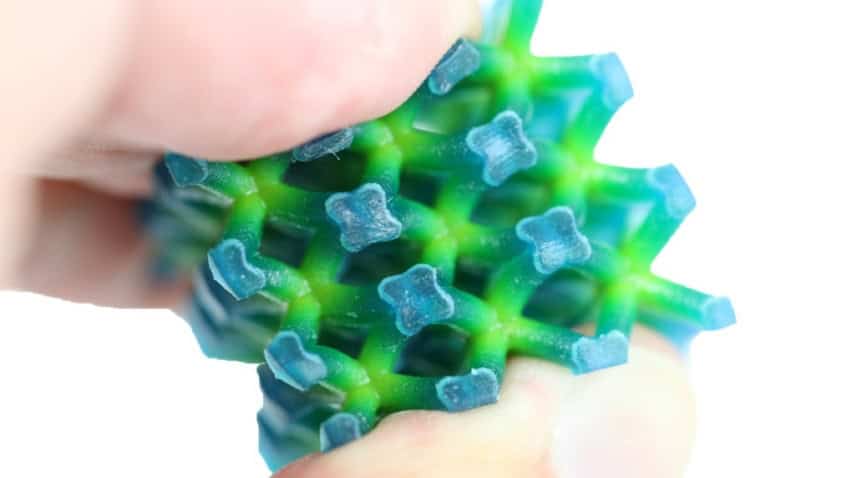
Engineers will have an easier time 3D printing objects out of multiple different materials with the release of an open-source tool, OpenVCAD, that can convert complex gradient designs into printer ready code for advanced engineering applications.
Designing and 3D printing gradients, where 2 materials gradually blend from one to another, is extremely difficult.
Conventional computer-aided design (CAD) software tends to assume that the same material exists within the boundaries of the different areas within a 3D design and struggle to produce objects with truly continuous gradients.

“Unlike traditional CAD software, where you’re forced to sketch everything out for each change and you cannot represent graded materials, our tool allows users to change one small variable and watch the whole design update in an easy way,” says Robert MacCurdy, who led the project in the Matter Assembly Computation Lab at the University of Colorado Boulder, USA.
“This is the first multi-material, code-based design tool that is widely available. It allows for good complexity when printing objects, it’s accessible and it’s intuitive to write and design.”
Materials with continuous gradients, called ‘functionally graded materials’, can enhance the mechanical performance of materials, optimise weight distribution and eliminate sharp interfaces between materials where stress could concentrate in an object.

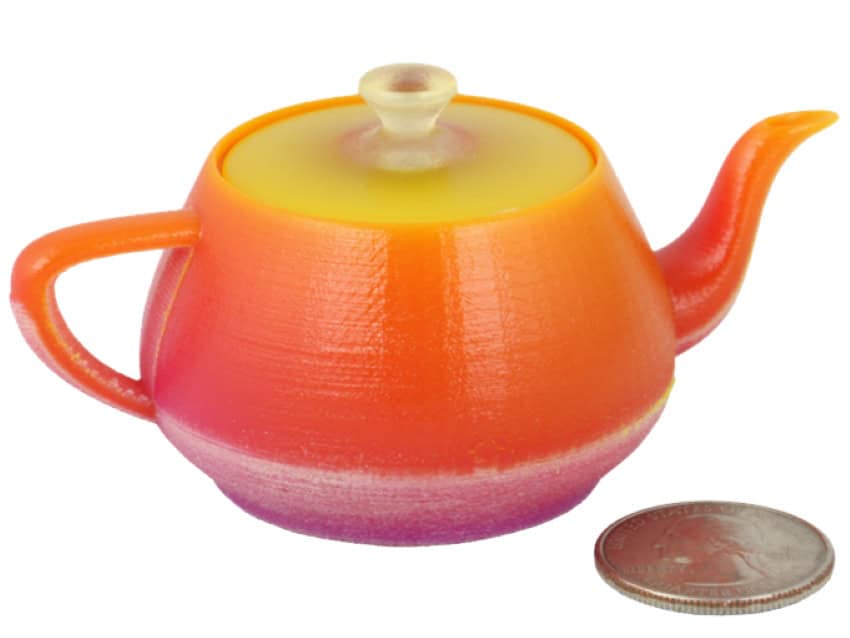
“There’s certainly a history of multi-material design study and practice that existed well before OpenVCAD,” says MacCurdy.
“But we believe the overhead of writing specific code for specific projects every single time prevents engineers from doing as much design as they could.”
The researchers anticipate using OpenVCAD to more efficiently design print graded electronics, sensors and radio-frequency components for devices. They also suggest that the method could combine fundamentally different materials, such as flexible elastomers and rigid polymers, to enable new designs in soft robotics.
The software is presented in a paper published in the journal Additive Manufacturing.